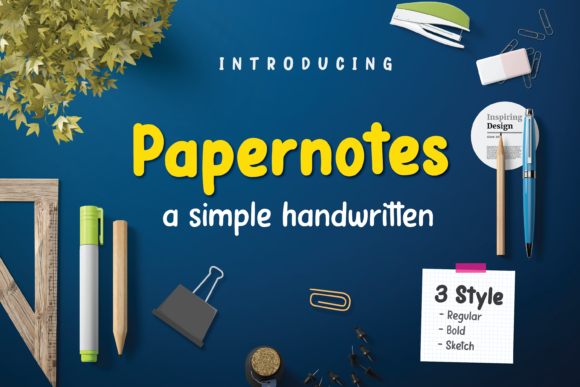
Bringing the Warmth of Handwriting Back to Digital Projects with Papernotes
In an era dominated by sterile, perfectly aligned sans-serif typefaces and algorithmic design systems, there is a growing desire for something that feels distinctly human. We are seeing a shift in digital consumption where users crave authenticity over perfection. This is where Papernotes steps in as more than just another font download; it represents a bridge between the tactile comfort of a journal and the efficiency of modern digital workflows.
This sweet handwritten font is designed to take your projects to the next level by injecting personality into content that often lacks soul. Whether you are a freelancer pitching a creative brief, an educator designing lesson plans, or a business owner crafting a brand story, the subtle imperfections of handcrafted characters can make all the difference. The relevance of Papernotes lies in its ability to mimic the natural flow of ink on paper, creating an immediate emotional connection with the reader.
The Evolution of Digital Typography
Typography has always been the voice of design. For decades, the web was defined by legibility above all else, leading to a homogenization of fonts like Arial, Helvetica, and Roboto. While these typefaces served their purpose, they often failed to convey warmth or individuality. As the internet matured, so did user expectations. People no longer want to feel like they are reading a corporate manual; they want to feel like they are having a conversation.
This evolution mirrors broader lifestyle shifts. Modern professionals are increasingly valuing work-life balance and personal expression. The "hustle culture" aesthetic of rigid, industrial design is giving way to a softer, more approachable vibe. In this context, Papernotes features beautifully handcrafted characters that align perfectly with the current market preference for organic, human-centric design. It allows creators to break away from the grid without sacrificing readability.
The trend is not just about aesthetics; it is about psychology. Studies in consumer behavior suggest that handwritten elements increase trust and engagement. When a user sees a font that looks like it was written by a person, they subconsciously associate the content with effort, care, and authenticity. This is particularly relevant for small businesses and independent creators who need to compete with larger corporations. By using a font like Papernotes, they can signal that real people are behind the screen.
Practical Applications for Modern Creators
The versatility of Papernotes makes it a powerful tool across various professional landscapes. It is not merely a novelty font reserved for greeting cards; it is a functional asset that enhances communication strategies when used correctly.
- Content Marketing and Blogging: For bloggers and marketers, the challenge is often standing out in a crowded feed. Using Papernotes for headlines, pull quotes, or call-to-action buttons can guide the eye and emphasize key messages. It transforms a standard blog post into a narrative experience, encouraging readers to stay longer and engage more deeply.
- Educational Materials: Educators and trainers are constantly looking for ways to make learning materials less intimidating. Handwritten fonts soften the tone of textbooks, worksheets, and presentation slides. They create a welcoming atmosphere that encourages students to participate, making complex information feel more accessible and friendly.
- Brand Identity: Entrepreneurs building lifestyle brands, coffee shops, boutiques, or artisanal businesses often struggle to find a visual identity that reflects their values. A logo or packaging design featuring Papernotes immediately communicates craftsmanship and attention to detail. It suggests that the product inside was made with love, not mass-produced in a factory.
- Digital Planners and Organizers: With the rise of digital productivity tools, there is a massive demand for planners, trackers, and journals that look like their physical counterparts. Professionals who use apps like GoodNotes or Notion can import Papernotes to digitize their note-taking process, retaining the joy of handwriting while enjoying the convenience of cloud storage.
Balancing Style and Functionality
While the appeal of a handwritten font is undeniable, practical application requires a thoughtful approach. The key to success lies in moderation. Just because Papernotes features beautifully handcrafted characters does not mean every word in your document should be set in this style. Overuse can lead to visual fatigue and reduced readability.
The most effective strategy is to use Papernotes for emphasis rather than body text. Pairing it with a clean, neutral sans-serif font creates a beautiful contrast. The structural stability of a standard font provides a solid foundation, allowing the whimsical nature of Papernotes to shine as an accent. This combination ensures that your message remains clear while still benefiting from the unique character of the handwritten style.
For instance, a marketing email might use a standard font for the main body to ensure quick scanning, but utilize Papernotes for the subject line or the sign-off. This small touch adds a layer of personalization that can significantly improve open rates and response times. Similarly, in social media graphics, using the font for short captions or hashtags can make the content pop against a busy background.
Meeting User Expectations in a Fast-Paced World
Today's audience has a remarkably short attention span. They scroll through feeds rapidly, filtering out content that looks generic or automated. To capture interest, designers and writers must create moments of pause. A well-placed handwritten element acts as a visual anchor, stopping the scroll and inviting the user to read further.
This aligns with the growing demand for "slow design"—an approach that prioritizes intentionality and human connection over speed and volume. As we move forward, the distinction between digital and physical experiences will continue to blur. Users expect digital interfaces to offer the same sensory richness as the physical world. Papernotes bridges this gap by bringing the texture of paper to the screen.
Furthermore, the customization capabilities of modern design software allow users to tweak kerning, weight, and spacing to suit specific needs. This flexibility means that Papernotes can be adapted for everything from elegant wedding invitations to bold streetwear merchandise. The font evolves with the project, maintaining its core identity while adapting to different contexts.
Why This Matters for Your Workflow
Integrating Papernotes into your workflow is not just about changing a font setting; it is about shifting your mindset toward more authentic communication. In a market saturated with AI-generated content and templated designs, human touches are becoming a premium commodity. By choosing a font that reflects human effort, you are signaling to your audience that you value quality and connection.
For freelancers and agencies, offering a design package that includes custom typography can be a significant competitive advantage. Clients are increasingly aware of the power of branding and are willing to invest in assets that help them stand out. A font like Papernotes offers a ready-made solution for those looking to elevate their visual language without needing extensive graphic design skills.
Ultimately, the goal is to create work that resonates. Whether you are writing a newsletter, designing a poster, or organizing your personal schedule, the right typography sets the tone. Papernotes brings a sense of warmth and approachability that helps build stronger relationships with your audience. It reminds us that behind every screen is a person, and behind every project is a story waiting to be told in a unique voice.
As we look to the future of digital design, the trend toward personalized, human-centric aesthetics shows no signs of slowing down. Embracing tools like Papernotes allows you to stay ahead of the curve, ensuring your projects remain relevant, engaging, and distinctly yours.