Spagheti: Elevating Your Projects with a Delightfully Charming Script
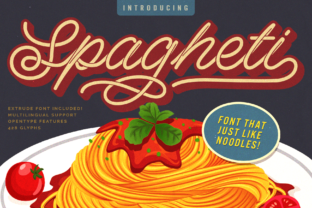
There is a distinct moment in every creative project when the design feels flat, no matter how good the content is. You have the perfect message, the right colors, and a clean layout, yet something is missing. That missing ingredient is often personality. This is where Spagheti steps in. As a deliciously charming script font, Spagheti does more than just display text; it infuses your work with warmth, movement, and a sense of celebration. It is designed to make you feel like life is worth celebrating, turning ordinary headlines into moments of joy.
However, while the visual appeal of Spagheti is undeniable, using it effectively requires more than just downloading a file and slapping it on a flyer. Many creators rush to apply script fonts because they look pretty, only to end up with designs that are difficult to read or professionally awkward. To get the most out of this typeface, you need to understand its specific strengths and limitations. Let's explore how to use Spagheti correctly so your projects truly shine.
Understanding the Allure of Spagheti
Spagheti was created with a singular mission: to celebrate all good things in life. Unlike rigid, geometric sans-serifs or formal serifs, Spagheti mimics the fluid motion of handwriting with a playful twist. The letters connect naturally, creating a flow that guides the eye across the page. This makes it an ideal choice for wedding invitations, bakery branding, lifestyle blogs, and social media graphics that aim to feel personal and approachable.
The charm of Spagheti lies in its irregularity. No two strokes are perfectly identical, which gives it a human touch. In a digital world dominated by sterile, automated templates, this font offers a breath of fresh air. It signals to your audience that there is a real person behind the brand, someone who cares about the details. Whether you are a small business owner trying to build community or a blogger wanting to express your unique voice, Spagheti provides the emotional connection that standard fonts often lack.
Pitfalls in Choosing and Applying Script Fonts
Despite its versatility, Spagheti is frequently misused. The most common mistake is assuming that because a font looks "fun," it can replace body text entirely. While Spagheti is excellent for headlines, logos, and short phrases, it is generally not suitable for long paragraphs. The connecting strokes and varying letter heights can cause eye fatigue when reading dense blocks of text. If you try to force Spagheti into a 500-word article, your readers will struggle to follow the narrative, leading to high bounce rates and poor user engagement.
Another frequent error involves neglecting contrast in pairing. A script font like Spagheti is bold in personality, but it needs a calm partner to balance it out. Pairing Spagheti with another decorative or equally busy font creates visual chaos. Similarly, placing it over a complex background image without sufficient spacing can render the text illegible. When the text becomes unreadable, the charm of the font is lost, and the message fails to communicate.
Size is also a critical factor often overlooked. Scripts rely on fine details to maintain their character. If you scale Spagheti down too much for a mobile view or a small icon, those delicate connections may blur or disappear completely. This results in a blobby appearance that looks unprofessional rather than elegant. Always test your font at the actual size it will be displayed before finalizing your design.
Why These Mistakes Matter
When you ignore these guidelines, the impact goes beyond aesthetics. Poor readability directly affects conversion rates. If a customer cannot quickly read a price or a call-to-action because of a poorly chosen font combination, they are likely to leave. Furthermore, using a script font incorrectly can dilute your brand identity. If your brand aims for authority and precision, but you use a playful script everywhere, you send mixed signals to your audience. Consistency in typography builds trust, and inconsistency erodes it.
Inefficient usage also wastes resources. Re-designing materials because the original choice was impractical costs time and money. For freelancers and entrepreneurs, time is currency. By avoiding these common traps from the start, you ensure your workflow remains smooth and your output remains high-quality.
Practical Strategies for Success
To avoid these pitfalls, start by defining the role of the font in your project. Ask yourself: Is this headline or body copy? If it is a headline, Spagheti is likely a fantastic choice. Use it to announce a sale, title a blog post, or highlight a special offer. Keep the text short and punchy. Limit the number of words to allow each letter to breathe.
Next, focus on pairing. The golden rule of typography is contrast. Pair the organic, flowing nature of Spagheti with a clean, neutral sans-serif for your supporting text. For example, use Spagheti for the main title and a simple font like Helvetica or Open Sans for the description. This combination ensures that the eye is drawn to the message first, then guided through the details effortlessly. This hierarchy makes your design easier to scan and understand.
Always check legibility before publishing. View your design on different devices. Does the text remain clear on a smartphone screen? Is there enough white space around the letters? If the letters are touching or overlapping inappropriately, adjust the kerning (spacing between characters). Proper spacing is the difference between a professional look and a messy one. Don't be afraid to increase the line height if you are using multiple lines of script.
Consider the context of your audience. If you are designing for a luxury market, Spagheti might need to be used sparingly to maintain exclusivity. If you are targeting a family-oriented audience, such as parents or hobbyists, the font's celebratory nature will resonate deeply. Understanding who will see your work helps you decide how much weight to give the font's personality.
Evaluating Your Choice Before Committing
Before you download or purchase Spagheti, take a moment to evaluate its licensing and technical specs. Ensure the license covers your intended use, whether it is for print, web, or commercial merchandise. Some fonts have restrictions on the number of impressions or require additional fees for broad distribution. Ignoring these details can lead to legal issues later on.
Test the font in a variety of scenarios. Create a mock-up with your actual logo, a sample headline, and a paragraph of body text. See how it performs in both light and dark modes. Check how it interacts with different colors. Sometimes a font looks great on white but disappears on pastel backgrounds. By running these tests early, you save yourself from making costly changes after the project is nearly complete.
Finally, remember that less is often more. The power of Spagheti comes from its ability to stand out. If you use it everywhere, it loses its impact. Reserve it for the moments that truly deserve to be celebrated. When used with intention and care, Spagheti transforms a simple design into a memorable experience. It reminds us that creativity should be joyful and that good design is about making people feel good.
By steering clear of common errors and focusing on practical application, you can harness the full potential of this charming typeface. Whether you are launching a new product, writing a heartfelt newsletter, or crafting a custom invitation, Spagheti is ready to help you tell your story in the best possible way. Make the smart choice, prioritize clarity, and let your designs speak with the same enthusiasm that the font itself embodies.