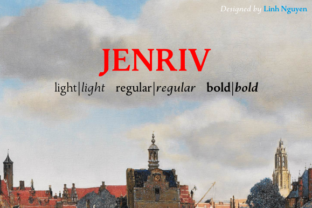
Jenriv: A Modern Serif for Distinctive Brand Storytelling
In the crowded landscape of digital typography, finding a typeface that balances historical gravitas with contemporary readability is an ongoing challenge. Many designers struggle to find fonts that command attention without shouting. Jenriv emerges as a compelling solution for professionals seeking a distinct visual identity. It is not merely another serif family; it is a carefully calibrated blend of traditional influences and modern functionality. For creators, marketers, and small business owners looking to elevate their brand narrative, Jenriv offers a sophisticated tool that bridges the gap between classic elegance and current design trends.
The Core Identity of Jenriv
At its heart, Jenriv is defined by its well-balanced Latin details and distinctive contrasts. Unlike many modern serifs that flatten their strokes to maximize screen legibility at the expense of character, Jenriv retains a sense of organic movement. The letterforms possess a specific weight distribution that feels intentional rather than mechanical. This balance allows the font to maintain its integrity across various media, from high-resolution print materials to mobile interfaces where pixel density varies significantly.
The aesthetic appeal of Jenriv lies in its ability to be both exquisite and subtle. It does not demand immediate recognition through aggressive styling but rather invites closer inspection. This subtlety is crucial for brands aiming to project reliability and thoughtfulness. When used correctly, the font creates an atmosphere of refined professionalism, making it an ideal choice for industries where trust and quality are paramount, such as legal services, luxury retail, or academic publishing.
Key Characteristics and Design Strengths
What sets Jenriv apart in a sea of generic sans-serifs and overused grotesques is its unique structural DNA. The contrast between thick and thin strokes is pronounced enough to add personality but controlled enough to ensure clarity. This characteristic makes it particularly effective for long-form content, where reader fatigue can become a significant issue with overly decorative typefaces.
- Distinctive Contrasts: The varying stroke widths create a rhythmic flow that guides the eye naturally down the page. This dynamic quality prevents text blocks from appearing as static walls of gray.
- Traditional Influences: The design draws inspiration from old-style serifs, incorporating humanist features that make lowercase letters feel approachable and warm.
- Contemporary Aesthetic: Despite its roots, the proportions have been updated to suit modern layouts, ensuring compatibility with minimalist web designs and clean corporate branding.
For freelancers and bloggers who need to establish a unique voice without compromising on readability, these characteristics provide a solid foundation. The font's versatility means it can adapt to different contexts without losing its core identity. Whether used for a headline that needs to stand out or body copy that needs to sustain engagement, Jenriv delivers consistent performance.
Practical Performance in Real-World Applications
Evaluating a typeface requires looking beyond its beauty and considering how it functions within a workflow. In practical scenarios, Jenriv demonstrates remarkable flexibility. Its x-height is optimized for excellent legibility on digital screens, which is a critical factor for publishers and educators creating online courses or articles.
When implementing Jenriv into a brand system, consistency becomes easier to achieve. The font family typically includes a range of weights and styles that allow for clear hierarchy without introducing conflicting typefaces. A designer might use a bold variant for impactful headlines while switching to a lighter weight for detailed descriptions, maintaining a cohesive visual language throughout the project. This scalability is essential for small business owners managing their own marketing materials, as it reduces the cognitive load of selecting compatible fonts.
Furthermore, the reliability of Jenriv extends to its technical implementation. Modern web fonts require efficient loading times to prevent layout shifts and improve user experience. Jenriv is generally engineered with these performance metrics in mind, ensuring that the elegant appearance of the text does not come at the cost of site speed. For SEO-conscious creators, this balance between aesthetics and technical efficiency is vital for maintaining search engine rankings and user retention.
Who Benefits Most from Jenriv?
While typography is subjective, certain audiences will find Jenriv particularly aligned with their goals. Professionals in creative fields often seek tools that offer a competitive edge. For graphic designers and art directors, Jenriv provides a versatile asset that can handle diverse briefs, from editorial layouts to packaging design.
Entrepreneurs and small business owners frequently face the dilemma of hiring expensive design agencies versus DIY solutions. Jenriv serves as a powerful resource for those taking the DIY route. By providing a premium look without requiring advanced design skills, it empowers business owners to produce high-quality collateral independently. The font's ability to convey sophistication helps level the playing field against larger competitors.
Educators and content creators also benefit from the font's readability. In environments where information density is high, such as textbooks, white papers, or educational blogs, Jenriv ensures that complex ideas are presented clearly. The subtle elegance of the typeface adds a layer of authority to the content, reinforcing the credibility of the message being delivered.
Navigating Limitations and Making Strategic Choices
No single typeface is a universal solution, and Jenriv is no exception. Its strong personality may not suit every project. For instance, in contexts requiring absolute neutrality, such as technical documentation or utility apps, a more utilitarian sans-serif might be a better fit. Additionally, the distinctive contrasts of Jenriv could potentially reduce legibility in very small sizes or low-resolution print applications if not managed carefully.
Designers must also consider the cultural context of their audience. While Jenriv leans towards a Western classical tradition, projects targeting global markets should ensure the font supports the necessary character sets and aligns with local aesthetic preferences. It is always prudent to test the font in the actual environment where it will be displayed before committing to a full-scale rollout.
Despite these considerations, the strategic value of Jenriv remains high. It excels in situations where emotional connection and brand differentiation are priorities. By choosing Jenriv, stakeholders signal a commitment to quality and attention to detail. This decision can subtly influence how a product or service is perceived, often leading to higher engagement rates and stronger brand loyalty.
Integrating Jenriv into Your Workflow
To get the most out of Jenriv, integration should be thoughtful rather than automatic. Start by defining the role the font will play in your communication strategy. Will it serve as the primary display font, or will it be reserved for specific accent elements? Establishing clear guidelines early in the process ensures that the font is used consistently and effectively.
Pairing Jenriv with complementary typefaces can further enhance its impact. Because Jenriv has a strong presence, it pairs well with simple, geometric sans-serifs that do not compete for attention. This combination allows for a harmonious balance between structure and style, creating a visual hierarchy that is easy for users to navigate.
Ultimately, the success of any typographic choice depends on how well it serves the content and the audience. Jenriv offers a robust platform for storytelling, combining the timeless appeal of serif design with the functional demands of the modern digital age. For those willing to invest time in understanding its nuances, it represents a valuable addition to any professional toolkit, capable of transforming ordinary communications into memorable experiences.