Zambrota: Elevate Your Designs with Handwritten Charm
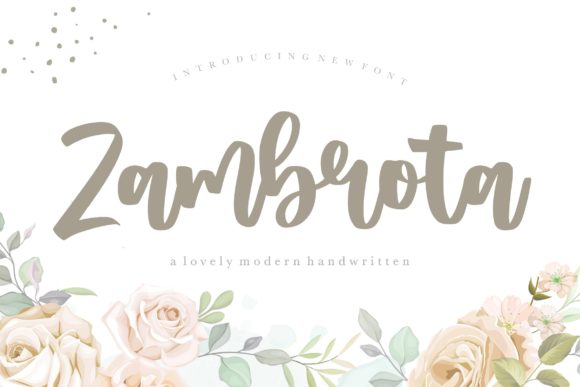
There is a distinct magic in seeing ink on paper. It carries the weight of human intention, the slight tremor of a hand, and the unique pressure of a moment that no machine can perfectly replicate. Zambrota captures this essence perfectly. Created with the help of a brush pen, this lovely handwritten font brings an organic, fluid quality to digital screens that often feels missing in our increasingly polished world.
When you are working on a project that needs to feel personal, authentic, or creatively spirited, Zambrota serves as more than just a typeface; it acts as a collaborator. Its incredibly versatile nature means it fits a wide pool of designs, elevating them to the highest levels without demanding attention through loudness. Instead, it invites the viewer in. Adding this font to your favorite creative ideas allows you to notice how they come alive, transforming flat layouts into experiences that resonate on a deeper emotional level.
The Artistry Behind the Letters
Understanding the origin of a font changes how you use it. Zambrota was not generated by algorithms mimicking handwriting; it was crafted using a brush pen. This distinction is crucial for designers who value authenticity. A brush pen offers variable line width based on the angle and pressure applied during writing. Zambrota translates these nuances into digital curves, ensuring that every letter has a sense of movement and flow.
This characteristic makes it stand out against rigid sans-serif or serif fonts. While those typefaces offer stability and structure, Zambrota offers warmth and approachability. It bridges the gap between professional design and casual communication. Whether you are designing a wedding invitation, a coffee shop menu, or a blog header, the brush strokes provide a texture that suggests care and effort were put into the creation.
For educators and bloggers, this font can be a powerful tool to make content feel less like a lecture and more like a conversation. The slight irregularities in the strokes signal to the reader that there is a human behind the screen, fostering trust and engagement. It is a subtle psychological cue that works effectively across various contexts.
Creative Applications for Every Professional
The versatility of Zambrota lies in its ability to adapt to different tones and industries. It is not limited to one specific aesthetic but rather enhances the core message of diverse projects. Here is how different creators can leverage its potential:
- Branding and Identity: Small business owners and entrepreneurs often struggle to differentiate themselves in crowded markets. Using Zambrota for a logo or brand mark can instantly communicate a boutique, artisanal, or handmade vibe. It works exceptionally well for bakeries, craft stores, and lifestyle brands where the story of the maker is central to the product.
- Editorial and Publishing: For publishers and book designers, Zambrota adds character to cover titles and pull quotes. It breaks the monotony of body text, drawing the eye to key moments in a narrative. In magazines, it can serve as a stylish subhead that guides the reader through complex articles without disrupting the visual hierarchy.
- Digital Marketing: Marketers know that attention spans are short. An email newsletter or social media graphic featuring Zambrota stands out in a feed dominated by corporate clean lines. It creates a sense of urgency mixed with friendliness, encouraging clicks and shares. Use it for call-to-action buttons or promotional banners to inject personality into campaigns.
- Educational Materials: Teachers and course creators can use this font to make worksheets, certificates, and presentation slides feel more inviting. It softens the academic tone, making learning materials appear accessible and fun for students of all ages.
Styling Strategies for Maximum Impact
To get the most out of Zambrota, consider how you pair it with other elements. Because it is a display font with strong character, it often shines when contrasted with simpler, neutral typefaces. Pairing it with a clean sans-serif like Helvetica or a classic serif creates a balanced composition where the handwritten element takes center stage without overwhelming the layout.
Color also plays a significant role. Since Zambrota mimics ink, it pairs beautifully with earthy tones, deep blues, or rich burgundies. However, it can also pop against stark white backgrounds for a modern, high-contrast look. Experiment with opacity and layering effects to give the text depth, simulating the way real ink might sit on textured paper.
Don't be afraid to mix weights if available, or play with tracking (letter spacing). Tightening the tracking slightly can create a bold, impactful headline, while loosening it can evoke a sense of elegance and airiness. These small adjustments allow you to fine-tune the mood of your design to match your specific audience.
Maintaining Clarity and Consistency
While Zambrota is expressive, effective design still requires discipline. Overusing decorative fonts can lead to visual clutter, making your content hard to read. The key is strategic application. Reserve Zambrota for headlines, accents, logos, or short phrases where its personality can be appreciated. Avoid using it for long blocks of body text, as the varied stroke widths can reduce legibility at smaller sizes.
Consistency is another pillar of good design. If you choose Zambrota for your brand identity, ensure it is used consistently across all platforms, from your website to your packaging. This repetition builds recognition and reinforces the brand's voice. However, consistency does not mean rigidity. You can adapt the size, color, and orientation of the font to fit different formats while maintaining its core character.
For freelancers and agencies, having a library of such versatile fonts allows for rapid prototyping. You can quickly mock up concepts for clients, showing them how a handwritten touch can transform their vision. This practical approach saves time and provides immediate visual feedback on the direction of the project.
Inspiration for Your Next Project
If you are looking for concrete ways to start using Zambrota today, try these simple exercises. Take a recent project that feels too generic and introduce the font as a single focal point. Perhaps change the title of a blog post to see how it shifts the reader's perception. Or, redesign a business card to include a handwritten signature style for the contact name.
Consider the context of your audience. Are they looking for inspiration? Zambrota can spark creativity. Are they seeking reliability? Pair it with structured elements to show that creativity and professionalism can coexist. The goal is to make your work memorable without sacrificing clarity.
Ultimately, Zambrota is a tool for expression. It reminds us that design is not just about alignment and grids; it is about emotion and connection. By integrating this lovely handwritten font into your workflow, you add a layer of humanity to your digital creations. It transforms standard designs into something special, proving that even in a digital age, the touch of a hand remains the most powerful element of all.
Start experimenting now. Open your design software, select Zambrota, and let your creativity flow. Notice how the letters respond to your commands, how they fill space with energy, and how they bring your ideas to life. The possibilities are endless, limited only by your imagination.