Why Gothic Light is a Versatile Choice for Modern Design Projects
In the crowded landscape of digital typography, finding a typeface that balances modern minimalism with genuine elegance can be challenging. Gothic Light has emerged as a compelling option for professionals seeking a clean, sans-serif solution that does not sacrifice character for simplicity. This font represents more than just a set of glyphs; it is a tool designed to elevate visual communication across various mediums, from branding materials to digital interfaces.
Unlike many contemporary fonts that lean heavily into geometric rigidity or overly stylized quirks, Gothic Light offers a refined neutrality. It possesses a distinct clarity that makes it suitable for both high-impact headings and dense blocks of body text. For designers, developers, and content creators looking to establish a professional yet approachable tone, understanding the specific capabilities of this typeface is essential before integrating it into a workflow.
Defining the Character of Gothic Light
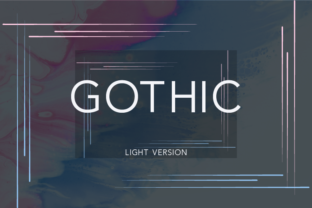
Gothic Light is fundamentally a modern sans serif font. The term "Gothic" in typography often refers to sans-serif styles, but this specific family distinguishes itself through its weight distribution and stroke modulation. The "Light" designation indicates a specific weight within the family, characterized by thin strokes that maintain structural integrity without appearing fragile. This balance is crucial because many light-weight fonts struggle to remain legible at smaller sizes or on lower-resolution screens.
The design philosophy behind Gothic Light leans towards functionality. The letterforms are constructed with open apertures and consistent x-heights, which enhances readability. When you examine the lowercase 'a' or 'g', you will notice a humanist influence that softens the geometric edges typically found in purely mechanical typefaces. This subtle warmth prevents the text from feeling cold or sterile, a common pitfall in corporate design.
What sets this font apart in a practical sense is its versatility. It avoids the extreme contrasts seen in transitional serifs or the uniformity of neo-grotesques. Instead, it occupies a middle ground where elegance meets utility. This makes it an excellent candidate for projects that require a sophisticated aesthetic without overwhelming the viewer with decorative elements.
Key Characteristics and Visual Traits
- Stroke Consistency: While labeled "Light," the strokes retain enough weight to ensure visibility across different media, including print and web.
- Open Counter Forms: The internal spaces within letters like 'o', 'e', and 'c' are spacious, aiding in rapid recognition and reading speed.
- Neutral Tone: The font carries no inherent emotional baggage, allowing it to adapt to the context of the surrounding content rather than dictating the mood.
- Modern Geometry: The underlying structure relies on clean lines and precise angles, providing a contemporary feel that aligns with current design trends.
These characteristics combine to create a typeface that feels intentional. When used correctly, Gothic Light guides the eye smoothly through the content, reducing cognitive load for the reader. This is particularly important in long-form content, such as blog posts, white papers, or instructional manuals, where user retention depends on comfortable reading conditions.
The Strategic Value of Pairing with Script Fonts
One of the most significant strengths of Gothic Light lies in its ability to pair effectively with script and handwritten fonts. In design theory, contrast is a primary driver of visual interest. A monochromatic design using only heavy weights or only decorative styles can become visually exhausting. By combining the structured, linear nature of Gothic Light with the organic, flowing curves of a script typeface, designers can achieve a dynamic hierarchy that feels both curated and personal.
Consider a scenario involving a wedding invitation suite or a boutique brand identity. Using a bold, heavy sans-serif might feel too aggressive, while a delicate script alone might lack authority. Here, Gothic Light serves as the perfect bridge. Its thinness complements the delicate lines of a calligraphic hand, creating a harmonious relationship where neither font competes for dominance. The sans-serif provides the necessary scaffolding and legibility, while the script adds the element of craftsmanship and individuality.
This pairing strategy extends beyond print. In web design, a headline set in a custom script font can be paired with body copy in Gothic Light. The result is a layout that draws attention immediately with the unique title while ensuring the informational content remains accessible. The neutral baseline of the sans-serif allows the script to shine without causing visual clutter. This synergy is why Gothic Light is frequently recommended for creative professionals who need to balance artistic expression with functional communication.
Practical Applications in Diverse Industries
The flexibility of Gothic Light makes it applicable across a wide spectrum of industries. For entrepreneurs and small business owners, establishing a trustworthy brand image is paramount. A logo or tagline utilizing this font can convey stability and modernity simultaneously. The clean lines suggest transparency and efficiency, traits highly valued by consumers today.
For educators and publishers, the priority is often clarity and accessibility. Textbooks, educational websites, and learning management systems benefit from the high legibility of Gothic Light. The font's open forms reduce eye strain, making it ideal for students engaging with material for extended periods. Furthermore, the font's ability to scale well ensures that key concepts highlighted in headings stand out clearly against the body text.
Marketers and freelancers often face the challenge of creating content that stands out in a saturated feed. Social media graphics, email newsletters, and landing pages require typefaces that render quickly and look good at various resolutions. Gothic Light performs well in these environments, offering a crisp appearance even when scaled down for mobile devices. Its modern aesthetic helps brands appear up-to-date and relevant, avoiding the dated look associated with overused default system fonts.
Evaluating Usability and Technical Performance
When selecting a font for a project, technical performance is just as critical as aesthetic appeal. Gothic Light demonstrates reliability in terms of rendering. On web platforms, the font files are optimized to ensure fast loading times, which is a key factor in user experience and search engine optimization. Slow-loading assets can negatively impact bounce rates, so choosing a font that integrates seamlessly with web standards is a strategic decision.
In terms of consistency, the font maintains its intended proportions across different operating systems and browsers. This cross-platform reliability is essential for global audiences where device diversity is the norm. Whether viewed on a high-resolution Retina display or a standard laptop screen, Gothic Light retains its sharp edges and intended spacing. This consistency builds trust with the audience, as the visual presentation remains stable regardless of how the content is accessed.
However, like any typeface, there are limitations to consider. The "Light" weight, while elegant, may not be sufficient for all contexts. In outdoor signage or low-light environments, the thin strokes might lose definition. Designers must exercise judgment regarding size and contrast ratios. For body text, it is advisable to increase line height and potentially adjust the color contrast slightly darker than usual to compensate for the reduced ink coverage. These adjustments are minor but necessary to maximize the font's effectiveness.
Long-Term Value and Workflow Integration
Investing in a font like Gothic Light offers long-term value due to its timeless quality. Trends in design often cycle rapidly, favoring bold, chunky fonts one year and ultra-thin, minimalist styles the next. However, a well-proportioned sans serif with a touch of humanist warmth tends to age gracefully. This longevity means that designs created today will likely remain effective for years, reducing the need for frequent rebranding or asset replacement.
For professionals managing multiple projects, the ease of use is a significant advantage. The font's straightforward structure makes it easy to kern and track, streamlining the typesetting process. There is no need for excessive manual adjustment to achieve a polished look, which saves valuable time in tight production schedules. This efficiency translates directly to better workflow management, allowing creators to focus more on content strategy and less on fixing typographic errors.
Making the Decision: Is Gothic Light Right for You?
Determining whether Gothic Light fits your specific needs requires an honest assessment of your project goals and audience. If your objective is to create a bold, loud statement that demands immediate attention through sheer volume, a heavier weight or a more expressive typeface might be more appropriate. Conversely, if your goal is to communicate complex information with clarity and sophistication, or to build a brand identity that feels refined and understated, this font is a strong contender.
It is particularly well-suited for professionals who value precision and elegance. Freelancers, bloggers, and publishers looking to differentiate their work from generic templates will find that Gothic Light provides a distinctive edge. Its compatibility with script fonts opens up creative possibilities for those looking to add a personal touch to their digital presence.
Ultimately, the success of any typeface depends on how it is used. Gothic Light is a powerful tool, but like any tool, it requires skillful application. By understanding its strengths in pairing, its technical reliability, and its aesthetic qualities, designers can leverage this font to create impactful, enduring visual communications. For those willing to explore its potential, Gothic Light offers a reliable foundation for building modern, elegant, and effective design solutions.