Why Brief Is the Handwritten Font That Actually Gets Things Done
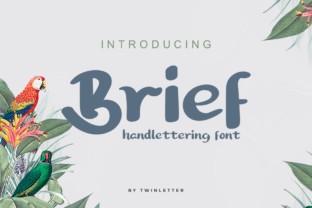
In a digital landscape often dominated by sterile, perfectly aligned sans-serifs and rigid serif classics, there is something undeniably refreshing about a typeface that feels like it was written in the moment. Brief is exactly that kind of character. It is not just another font file to download; it is a bold handwritten style carefully handcrafted to become a true favorite for designers who want their work to feel human, immediate, and authentic.
What makes Brief stand out isn't just its visual flair, but its incredible versatility. Its casual charm makes it appear wonderfully down-to-earth, readable, and ultimately incredibly adaptable. Whether you are working on a high-impact poster or a subtle blog post, this typeface bridges the gap between professional polish and personal touch. It looks outstanding in any context, whether it's being used on busy backgrounds as a standalone headline or integrated into complex layouts where readability is paramount.
The Power of "Done-by-Hand" in a Digital World
We live in an era of automation. Most of the text we consume daily is generated by algorithms, set in fonts designed for maximum legibility at small sizes. While efficiency is key, it often comes at the cost of personality. This is where the specific nature of Brief becomes a strategic asset rather than just a design choice.
When you use Brief, you are instantly signaling to your audience that there is a person behind the message. The slight irregularities in the strokes and the bold weight create a sense of urgency and importance without shouting. It mimics the feeling of someone jotting down a note quickly, perhaps with a marker or a thick pen, capturing attention before the user even processes the words. This psychological trigger is why it has become a go-to for brands trying to establish a genuine connection.
- Authenticity: In an age of influencer marketing and polished corporate imagery, Brief offers a grounded reality check.
- Approachability: The font removes barriers, making complex topics feel accessible and friendly.
- Memorability: Bold, handwritten styles stick in the mind longer than standard body text because they break the visual monotony.
Real-World Applications: Where Brief Shines
Understanding what a font is theoretically is one thing; seeing how it performs in real-world scenarios is where the magic happens. Designers and marketers have found unique ways to leverage the strengths of Brief across various industries. Here is how different users benefit from this versatile tool.
Social Media and Content Marketing
For content creators, the battle for attention is fought in split seconds. A standard headline on Instagram or LinkedIn often blends into the feed. However, a bold Brief headline can stop the scroll. Because of its casual charm, it works exceptionally well for quotes, pull-outs, or call-to-action buttons. When used on busy backgrounds—such as a photo collage or a textured video frame—the strong weight of the letters ensures the message cuts through the noise without losing its legibility.
E-Commerce and Product Packaging
Imagine walking down an aisle in a store filled with generic, mass-produced goods. Now, imagine a product with packaging that features the rough, energetic strokes of Brief. It suggests craftsmanship, small-batch production, or a brand with a story. For startups selling everything from artisanal coffee to handmade skincare, Brief communicates quality and care. It transforms a commodity into a curated experience.
Event Invitations and Print Collateral
While formal events might traditionally rely on elegant scripts, modern gatherings often lean towards a more relaxed vibe. Weddings, music festivals, and community workshops can all benefit from the down-to-earth feel of Brief. It invites people in rather than standing guard at the door. On flyers and posters, its ability to serve as a standalone headline means you don't need heavy graphic elements to make the information pop.
Who Benefits Most from This Typeface?
Different professionals will find different reasons to fall in love with Brief. It is not a one-size-fits-all solution, but rather a specialized tool that solves specific communication problems.
The Freelance Designer needs tools that offer speed and impact. Brief allows them to create compelling concepts quickly. The fact that it is readable even at large scales means less time tweaking kerning and more time focusing on layout. It is perfect for branding projects where the client wants to appear innovative yet approachable.
The Small Business Owner often wears many hats, including the role of designer. They need fonts that look good immediately without requiring hours of refinement. Brief's inherent balance of style and function means they can slap it onto a business card or a website header and have it look professional and intentional.
The Educator and Author looking to engage students or readers can use Brief to highlight key concepts. The handwritten aesthetic reduces the intimidation factor of dense text, making educational materials feel more like a conversation than a lecture.
Navigating Considerations Before You Choose
Even the most versatile fonts have their limits. To get the best results from Brief, it is important to understand how to apply it correctly. The strength of a font lies not just in its appearance, but in how it interacts with other design elements.
Legibility vs. Style
While Brief is remarkably readable, its bold, handwritten nature means it is not suitable for long blocks of body text. It is designed to be seen, not read for hours. Think of it as a loud voice in a quiet room—it commands attention but shouldn't be the background noise. Use it for headlines, subheads, captions, and short phrases. Pairing it with a clean, neutral sans-serif for body copy creates a harmonious contrast that keeps the reader engaged without causing eye strain.
Context Matters
The "casual charm" of Brief can sometimes clash with contexts that demand absolute formality. If you are designing a legal document, a financial report, or a medical brochure, the handwriting style might undermine the seriousness of the content. However, if you are writing a newsletter for a non-profit or a blog post about mental health, that same casualness becomes a profound strength, fostering trust and empathy.
Background Complexity
One of the standout features of Brief is its performance on busy backgrounds. However, this requires a bit of finesse. If the background image is too chaotic, even a bold font can struggle to maintain clarity. Using a slight drop shadow, a text stroke, or placing the text over a semi-transparent overlay can ensure the letters remain crisp and distinct.
Making the Most of Your Design Choices
Ultimately, choosing a font is about choosing a tone of voice. Brief speaks with confidence, warmth, and a touch of rebellion against the mundane. It is a typeface that acknowledges the imperfections of the world while striving to communicate clearly within them.
Whether you are launching a new product, revamping a website, or creating a social media campaign, taking the time to explore how a font like Brief fits your narrative can elevate your project from ordinary to memorable. It reminds us that effective communication is not just about the data we share, but the human connection we forge while sharing it.
As you experiment with your next creative project, consider giving Brief a try. See how it handles your busiest backgrounds and how it transforms a simple headline into a statement. In the right hands, it proves that a little bit of handwriting goes a long way in making your work truly unforgettable.